


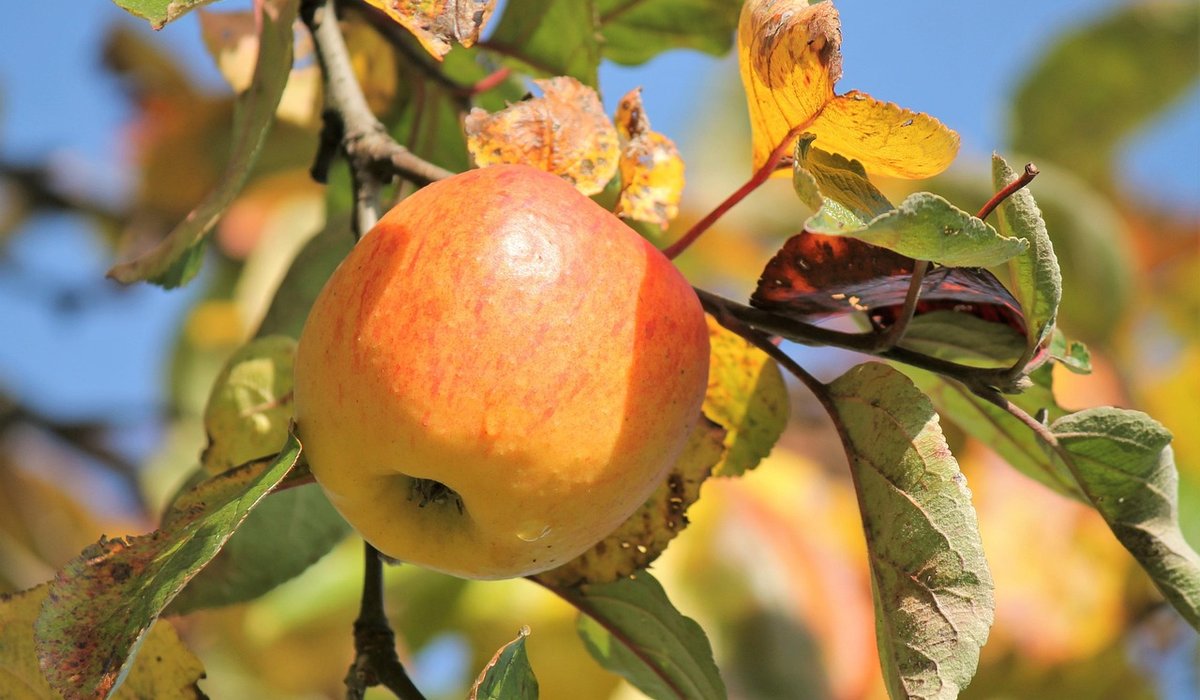
What makes a russet a russet
Russeting is the rough, dry, leathery skin that sets certain apples apart. It can be a light dusting of golden-brown across the shoulders of the fruit, or a thick, almost bark-like coat covering the whole apple. The colour runs from greenish-gold through bronze to dull brown, usually with a muted sheen rather than the glossy bloom of a Cox or a Discovery.
Some russets are born that way: the trait is genetic in Egremont Russet, Ashmead's Kernel and their kin. In others, russeting is brought on by weather — a cold, damp spell in early summer, or a late frost, will russet the skin of varieties that are normally smooth. That is why you occasionally find a russeted Cox in a wet year.
Gardeners sometimes treat russeting as a fault. It is anything but. The corky layer is tough, protective and useful: it shrugs off apple scab, resists codling moth and other pests, and helps the fruit keep far longer in store. Underneath, the flesh is dense, firm and fine-grained, with the nutty, pear-drop aroma that has kept these varieties in British orchards for centuries.
Heritage varieties worth growing
The russet family is broad, and each variety has its own character. A few favourites:
- Egremont Russet — raised in Sussex in the 1870s and still the benchmark. Golden-bronze, small to medium, with a rich, nutty flavour and firm, slightly dry flesh. Superb eaten fresh with cheese, and reliable across most of the UK.
- Ashmead's Kernel — a Gloucestershire apple from around 1700. Pale greenish-gold, heavily russeted, with an intense, almost pear-drop sweetness and a sharp edge. Excellent eater and a fine juicing apple. It bears on the tips of young wood, so prune lightly.
- Pitmaston Pine Apple — a Worcestershire variety, small and conical, with a distinct pineapple flavour. Crops heavily in good years, though it can be shy on cold, wet sites.
- Rosemary Russet — a Devon apple, late-ripening and sharp-sweet. Holds its shape in the oven, so it is a first-rate culinary fruit as well as a decent eater once mellowed in store.
- Brownlees Russet — a Hertfordshire variety from the 1840s, green-gold and crisp, with a clean, refreshing bite.
- Golden Russet and Roxbury Russet — two heirlooms with deep roots in the cider tradition. High in sugar and acid, they make a bright, aromatic cider and keep well into spring.
Growing russets in a British orchard
Russets are not difficult, but they reward a little care. Plant on a rootstock suited to your space: M26 for a small garden, MM106 for a half-standard in a larger plot, M25 if you want a proper orchard tree. They need full sun and decent drainage; a cold, wet clay will leave them sulking.
- Most russets flower in mid to late season and are partly self-fertile, but they crop far better with a compatible pollinator nearby — a Cox, a James Grieve or another late-flowering variety.
- Thin the clusters in June to one or two fruits. Russets can crop heavily and slip into biennial bearing if left alone.
- Watch for canker in wet western districts, and for woolly aphid on young wood.
- Pick late, when the fruit comes away easily. Russets rarely taste their best straight from the tree; a few weeks in a cool store brings out the flavour.
In the kitchen
Because the flesh is firm and dry rather than watery, russets behave beautifully in the oven. They hold their shape in tarts, bake whole without collapsing, and give a dense, almost biscuity texture to a pie. Egremont Russet and Rosemary Russet are the ones to reach for. For a simple pudding, core them, pack the centres with raisins and brown sugar, and bake until the skin just wrinkles.
Eaten fresh, they are at their best at room temperature rather than chilled, sliced alongside a sharp Cheddar or a blue. The nutty notes sit well with walnuts and a glass of dry cider.
Russets in the cider press
Russets earn their place in the cider shed. They bring high sugar, brisk acidity and moderate tannin, which is exactly what a balanced blend needs. Golden Russet, sometimes called the champagne of cider apples, ferments to a bright, aromatic cider with a long finish; Roxbury Russet adds depth and keeps the blend fresh. A traditional approach is to use russets as the sharp-sweet backbone, blended with a bittersweet or bittersharp for body and a touch of bitterness. Single-variety russet ciders are worth making too — they are pale, clean and full of apple character.
Planting, buying and keeping
If you have room for one tree, plant a russet. Bare-root maidens and two-year-olds go in between November and March, on a day when the ground is not frozen. Water well through the first two summers and keep a clear circle around the trunk.
Buy from a specialist nursery that propagates heritage varieties, or take scion wood from a local orchard group and graft your own. Look out for apple days in autumn, where you can taste before you commit. Stored in a cool, dark, slightly damp place, most russets will keep from October well into the new year, and some until March. Check them regularly and remove any that soften. A good russet in February is one of the quiet pleasures of the British allotment and orchard.


Leave a reply