


Why autumn work decides next year's crop
By late October the sap is retreating, shoot growth has stopped and the trees are easing themselves towards dormancy. Roots, though, carry on working while the soil stays warm, which is why autumn is the best planting and mulching season we get. A tree that goes into winter with clean bark, a decent mulch ring and no rotting fruit at its feet will start the spring with reserves rather than problems. Think of it as tucking the orchard in rather than shutting it down.
Clear the leaves, and put them somewhere useful
Apple scab overwinters in fallen leaves, and canker spores are spread further by wind and rain splash from leaf litter. Rake the ground beneath each tree, working out to roughly the spread of the branches, and keep at it through leaf fall: a quick pass every week is far easier than one exhausted weekend in November. Mowing with a collector box on a dry day does the job neatly on grass.
What you do with the rakings matters:
- Clean leaves from healthy trees can go into the leaf-mould bin, or be mown into the lawn in small quantities.
- Scabby or mildewed leaves are better binned, burned or put through a hot compost heap that genuinely reaches temperature.
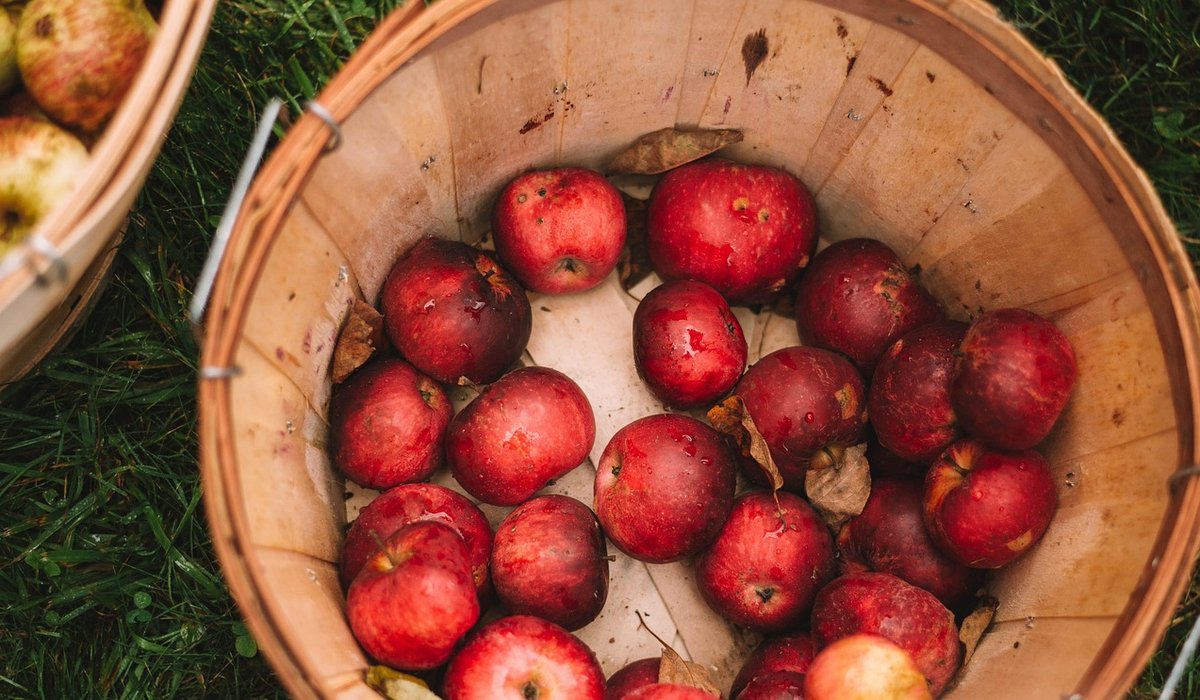
- Mummified fruit — the shrivelled brown apples still clinging to the twigs — should be picked off and disposed of the same way, as they carry brown rot into spring.
A single rotten apple left in the crotch of a tree is a small thing. A hundred of them on the ground is a nursery for trouble.
Guard the trunk: teeth, weather and wingless moths
Young trees are vulnerable in winter, when there is little else for rabbits and voles to eat. Fit a spiral guard or a sleeve of mesh around the trunk, and sink the base two or three centimetres into the soil so nothing can burrow underneath. Check the guard each autumn, loosen it if the trunk has thickened, and keep it clear of damp debris. Deer need something taller — a metre or more of mesh on stakes, well anchored.
Mid-October is also the moment to fit grease bands around the trunks of established trees. The female winter moth is wingless and must walk up the trunk to lay her eggs; a band of grease stops her. Keep bands clean and free of leaves, and replace them if they dry out. While you are at it, check tree ties and stakes — a tie that has been overtightened by summer growth can girdle a trunk just as surely as a rabbit.
Mulch wide, mulch deep enough, keep it off the bark
Spread well-rotted manure, garden compost or spent mushroom compost in a ring around each tree, ideally a metre across for a young tree and out to the drip line for an older one. Aim for five to eight centimetres deep, applied after rain while the soil is still warm, and leave a clear gap of about ten centimetres between the mulch and the trunk. Piling mulch against the bark traps moisture and invites collar rot, which can kill a tree far more quietly than any frost.
A good mulch ring suppresses weeds, keeps soil temperature steadier, feeds worms and holds water for the dry spell you will almost certainly get next July. It is the cheapest insurance in the orchard.
Pruning, mummified fruit and a tidy frame
Leave structural pruning until the tree is properly dormant, from late November into February, and choose a dry, mild spell rather than a hard frost. Take out dead, crossing and rubbing wood first, then cut any canker back to clean, unstained timber and clean your tools between trees. Aim for an open centre that lets light and air through; a well-ventilated tree dries faster and suffers less scab.
Autumn itself is best kept to tidying: clearing debris, removing rotten fruit, cutting long grass away from trunks. Save the saw for the depths of winter.
Cider time: pressing, patience and the wassail
For cider makers, autumn is the reward. Bittersharp and bittersweet varieties such as Kingston Black, Dabinett and Yarlington Mill are picked late, left to sweat for a week or two to soften and sweeten, then milled and pressed from late October into November. The juice goes into a cool shed to ferment slowly, often on its own wild yeast, and the orchard smells of apples and damp wood for weeks.
That culture carries right through to January, when wassailing season arrives. In orchards across the West Country and beyond, people gather with lanterns, cider-soaked toast hung in the branches, and a good deal of noise — beating pans, singing, sometimes a shot fired through the boughs — to wake the trees and see off whatever might spoil the coming year.
So rake the leaves, wrap the trunks and heap the mulch. Do it now, on a bright cold afternoon with the blackbirds working the windfalls behind you, and the orchard will thank you quietly, in blossom, around the middle of next May.


Leave a reply